



It’s no coincidence that writer-director Uwe Boll originally titled Citizen Vigilante as The Dark Knight. After reportedly receiving a cease-and-desist warning from Warner Bros. — and enjoying the free publicity that came with it — Boll moved forward with the project starring Armie Hammer (The Social Network, Call Me by Your Name), who, ironically, was once cast as Batman in George Miller’s ill-fated 2007 Justice League film.
Watch Brave New Hollywood’s exclusive interview with Armie Hammer about the film.
The film has already attracted controversy internationally before reaching audiences. Boll publicly argued that Citizen Vigilante was effectively denied a release in Germany after disputes with the country’s FSK ratings board over its classification. While supporters framed the disagreement as a debate about censorship and artistic freedom, the controversy only amplified attention on the film’s incendiary themes of vigilantism, crime, and public outrage.

Armie Hammer Returns to the Big Screen
As Hammer’s first feature in five years following allegations that effectively derailed his Hollywood career, Citizen Vigilante is a poor showcase for his considerable talent. At best, it attempts to channel the middle-class outrage of vigilante classics like Death Wish. At worst, it descends into anti-immigration propaganda, handing Hammer a succession of angry monologues targeting immigrants, religious groups, ethnic minorities, and anyone perceived as “soft on crime,” including police officers and judges.
Imagine a Batman who wages war almost exclusively on minorities, and you’ll have a sense of the film’s inflammatory agenda. Boll peppers the narrative with questionable statistics and talking points designed to justify the vigilante’s increasingly extreme actions.
Uwe Boll’s Controversial Vision of Vigilante Justice
As Sanders, Hammer stalks a nameless metropolis dressed in black, looking less like Batman than Bruce Wayne on an urgent shopping trip. He captures the simmering frustration of a man perpetually one bad day away from a breakdown. Is he hunting murderers and rapists? Or people talking during a movie? It hardly matters. Sanders is angry at everyone, and Hammer commits fully to the role.
The film also evokes Joel Schumacher’s Falling Down (1993), which similarly explored the rage of a disaffected middle-aged man. While Schumacher’s film drew criticism for its racial politics, it at least approached its subject with nuance and ambiguity. Boll, a perennial Razzie contender, prefers provocation to insight.
Why Citizen Vigilante Fails as a Comeback Film
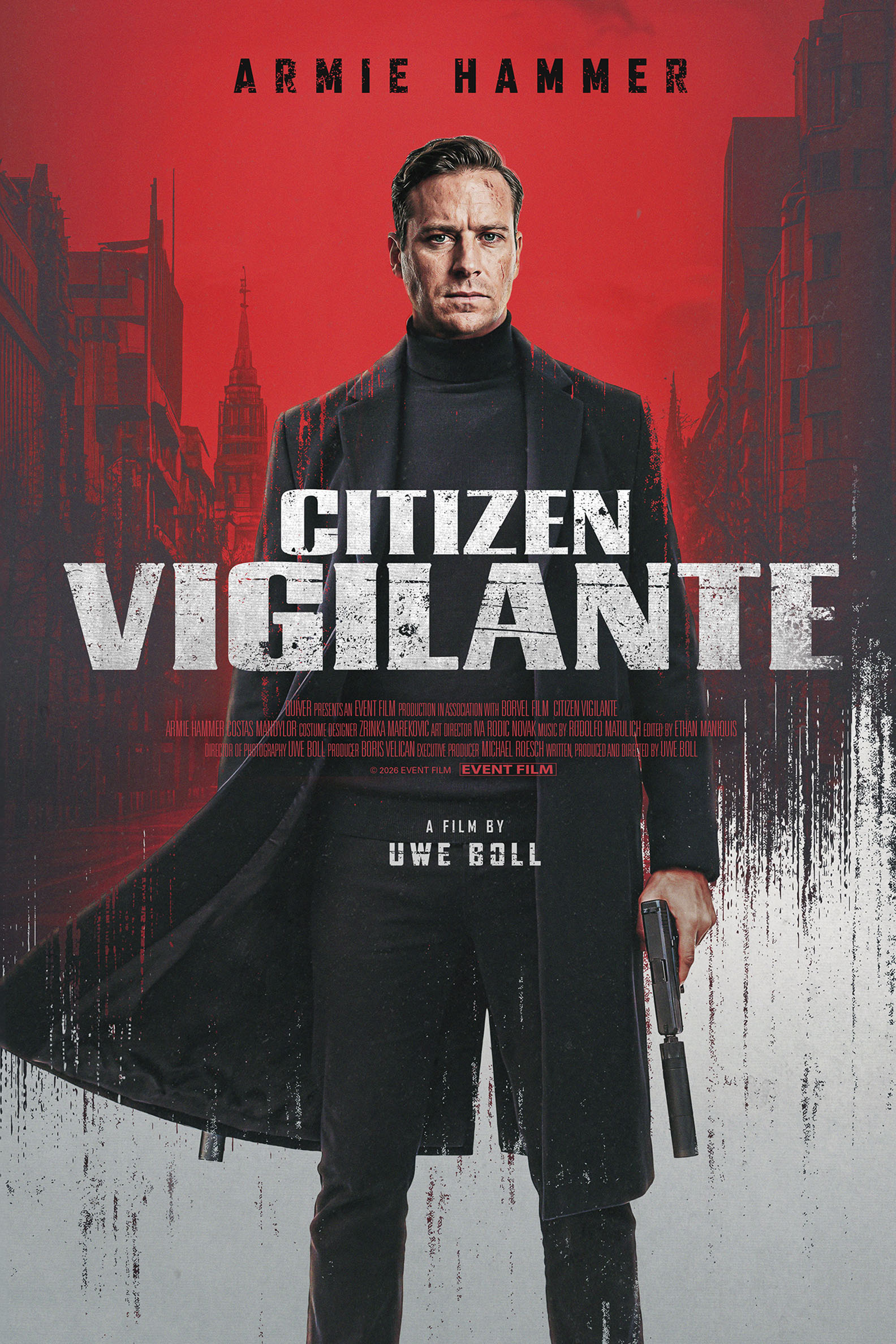 Hammer has said he accepted the role without reading the script, a reflection of how difficult it was for him to find work. One hopes his career rebound continues elsewhere. An actor capable of genuine subtlety — at times recalling a younger William Hurt — deserves material far better than this parade of grievance and hate.
For viewers curious about Hammer’s return to acting, Citizen Vigilante may attract attention as a comeback vehicle. Unfortunately, the film ultimately serves as a reminder of how much stronger both the actor and the genre can be when paired with material that values complexity over provocation.
Provocation Without Purpose
Despite Armie Hammer’s committed performance, Citizen Vigilante mistakes outrage for insight. What could have been a provocative examination of vigilantism instead becomes a one-note exercise in grievance, leaving its talented lead trapped inside a film more interested in provoking audiences than challenging them.