


There is something undeniably courageous, and at times wonderfully outrageous, about a group of LGBTQ+ activists who refuse to be silent in a country where guns have become as much a part of the national identity as the Constitution itself.
In Gays Against Guns, director Paul Rowley takes audiences on a moving, no-holds-barred journey into America’s troubling relationship with firearms, following the fearless members of Gays Against Guns (GAG), an activist organization born in the aftermath of the 2016 Pulse nightclub massacre in Orlando.
Gays Against Guns Official Website.
When Activism Becomes Political Theater
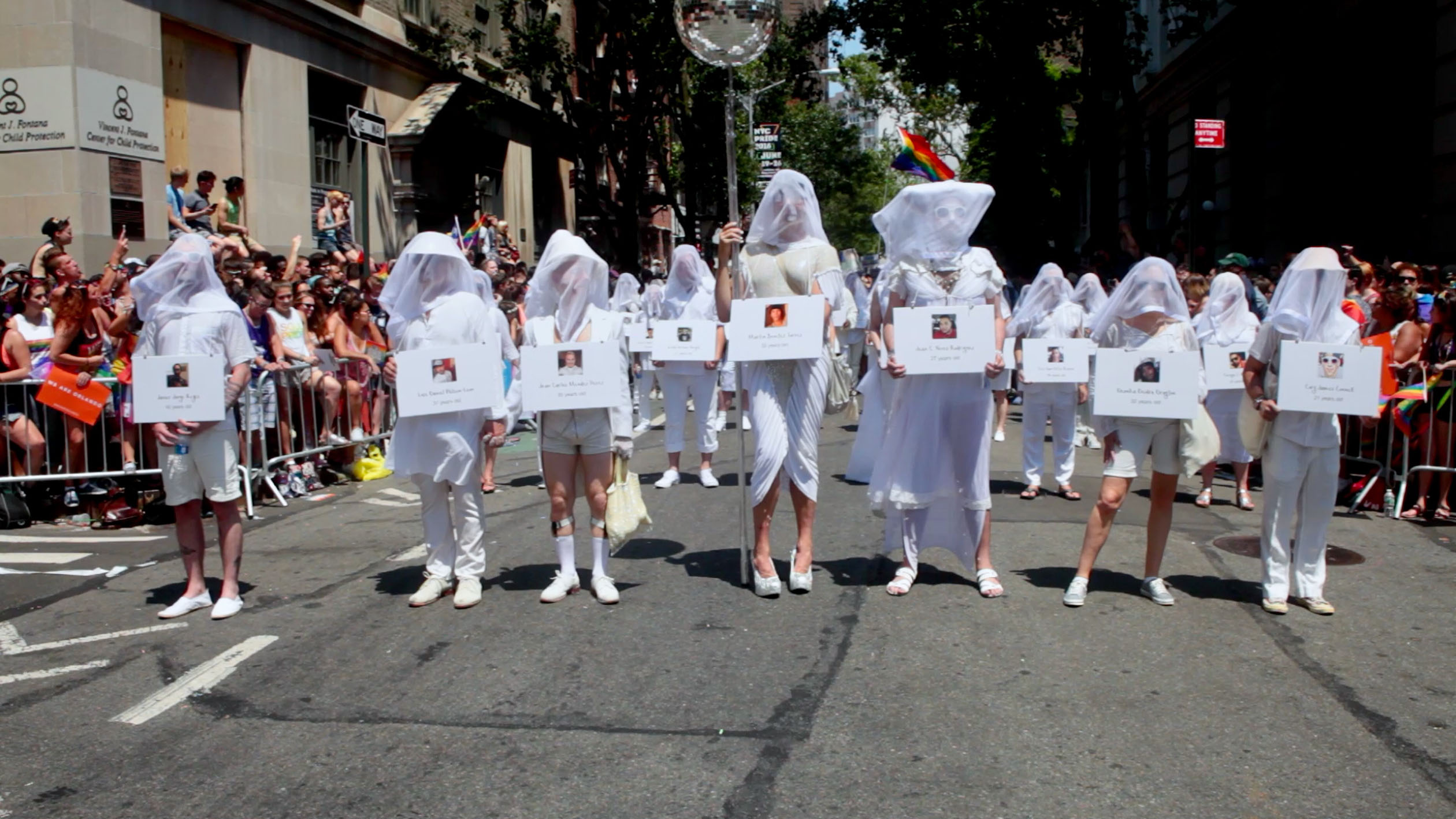
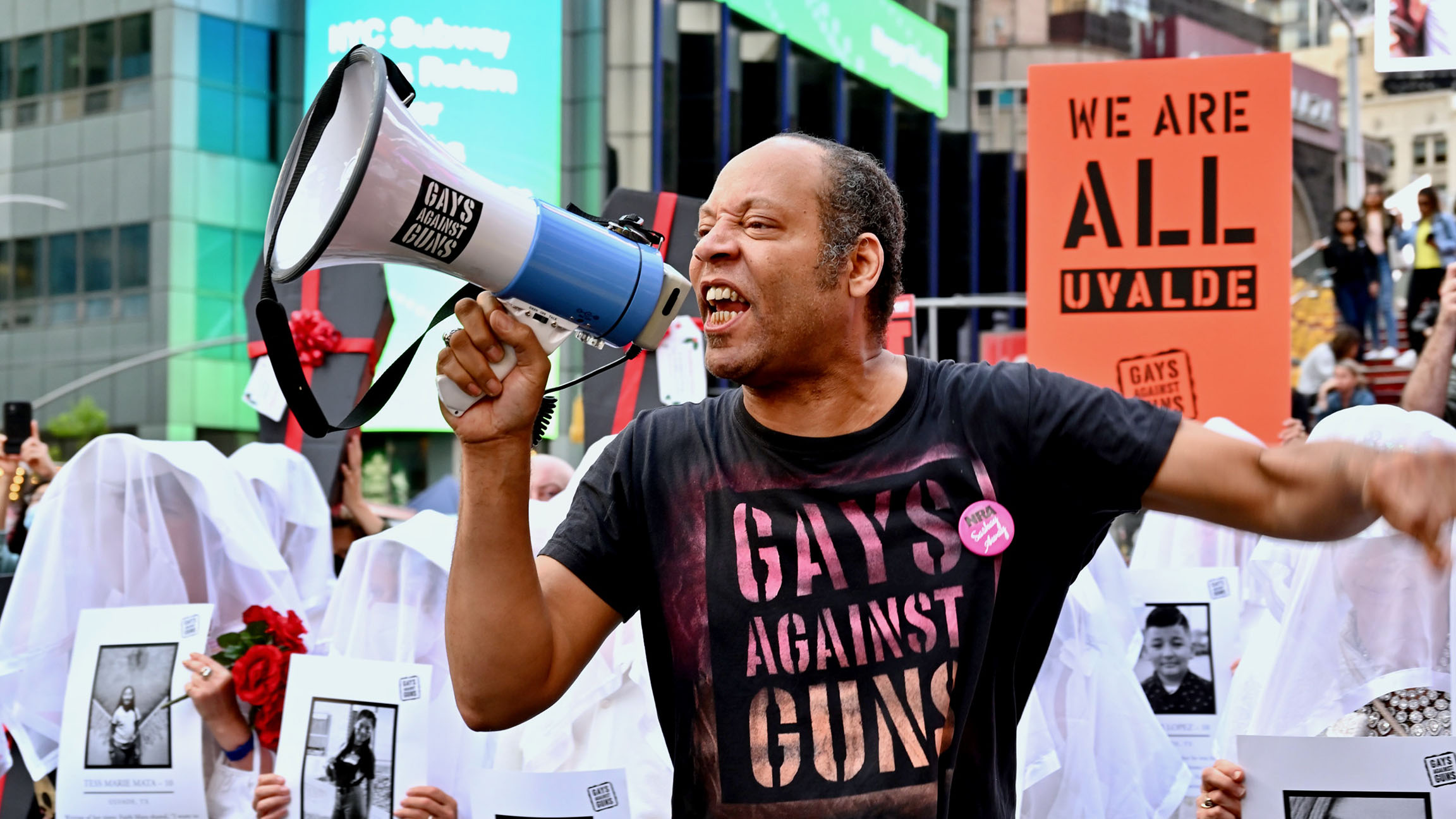
What makes the film especially compelling is the bold, often theatrical approach of its subjects. Armed with costumes, humor, provocative imagery, and an unapologetic presence, GAG members stage protests in spaces where they are neither welcomed nor always understood. Their demonstrations can be hilarious, deliberately uncomfortable, and occasionally absurd. But beneath the spectacle is a deadly serious mission: sometimes, to make people listen, you first have to make it impossible for them to look away.
Rowley captures this balance between performance and purpose with sensitivity, allowing the grief, exhaustion, anger, and vulnerability behind the activists’ public personas to emerge. The documentary also examines the evolution of the National Rifle Association (NRA) into the powerful political and cultural force it has become, offering important context for America’s seemingly endless gun debate.
Gun Violence, Identity and the American Experience
One of the film’s most profound observations comes from Gays Against Guns co-founder John Grauwiler, who speaks of “gun violence impacting many aspects of my identity.”
As a former teacher, the Sandy Hook massacre “literally brought me to my knees,” he recalls. The Charleston church shooting devastated him, while the Pulse nightclub massacre struck especially close to home as a gay man. Together, these tragedies reveal how gun violence can reach into different aspects of a person’s life, leaving emotional wounds that extend far beyond the immediate victims.
Grauwiler’s words deserve serious reflection. For many outside the United States, particularly those who have never experienced war or lived amid widespread armed violence, this complicated relationship between identity and firearms may be difficult to comprehend. Yet in America, gun violence has become so normalized that its shadow stretches across schools, nightclubs, places of worship, and everyday life. It is no longer simply a question of public safety but one of identity, belonging, and the fundamental freedom to exist without fear.
Rowley, himself an Irish immigrant, brings an interesting outsider’s perspective to this distinctly American predicament. He also deserves credit for staying with this project over several years, creating a documentary that is both a portrait of resilience and an examination of the emotional price of fighting for change.
A Fearless Documentary With Humor, Heart and Urgency
And yes, there is humor here, sometimes hilariously so. The activists’ irreverence is not a distraction from the tragedy but part of their resistance. The film can make you laugh one moment and leave you deeply saddened the next.
Gays Against Guns is a must-see at NewFest38, a festival known for championing brave, provocative, and hard-hitting LGBTQ+ cinema. But its importance extends far beyond festival audiences. This is a film for Americans exhausted by the gun control debate and by the way conversations about public safety inevitably become entangled in competing interpretations of the Constitution, the Second Amendment, and individual rights.
Whether one agrees with every tactic employed by Gays Against Guns is almost beside the point. The film makes it difficult to dismiss the people behind those tactics, their pain, their determination, and their refusal to accept gun violence as an unavoidable fact of American life.
After all, when a society becomes accustomed to the unacceptable, perhaps a little theatrical disruption is exactly what it needs.
In Conversation With Filmmaker Paul Rowley
Ahead of the NewFest38 screening, Brave New Hollywood reached out to director Paul Rowley about the film’s journey, the emotional cost of activism, and hopes for the future of gun violence prevention.
BNH: As an immigrant looking at America through a different cultural lens, what was the most disturbing thing you discovered about this country’s relationship with guns while making Gays Without Guns? Was there a particular moment or revelation that genuinely shocked you?
PR: For me, the thing I find most disturbing and upsetting about gun violence in the U.S. is that so many of these deaths are preventable. The more guns there are, the more people get shot, the more people die, the more families and communities are left grieving. And one life lost is too many.
And the realization that so many Americans are OK with normalizing this violence, or refusing to believe that more guns equals more death, is really deeply disturbing to me. A pro-gun person who thinks their opinions and demands for some kind of “freedom” are more important than a child’s life, than anyone’s life? I cannot understand that total lack of empathy, that selfishness.
The other thing that I find incredibly disturbing is that this is a for-profit industry – an industry that makes money of American lives lost. It doesn’t get any more morally corrupt than that. You choose to line your pockets by manufacturing, selling, and lobbying for products that kill your neighbours kids? I’ll never be able to understand how these people can sleep at night.
BNH: What initially caught your attention about Gays Against Guns (GAG), particularly its unconventional approach to gun violence prevention? What made you feel that this organization’s activism, creativity, and confrontational tactics deserved a documentary of their own?
PR: I first connected with GAG right after the Pulse shooting. As someone who has spent much of my life connected to clubs and nightlife, I was devastated by the massacre and wanted to connect with others in the community to show our support for the people murdered that night. But also to try and stop this ever happening again.
So I showed up at the first Pride march GAG took part in. And for me what really struck me was the rage, and the grief, so articulately manifested in a way that was coherent and useful, if that makes sense? The brilliantly witty and confrontational signage, the angry drag queens, and then the incredibly powerful presence of the Human Beings, the silent veiled figures in white who hold space for victims of gun violence. Seeing 49 of these figures walking down 5th Avenue and reducing the city to silence – I’ll never forget that.
BNH: What was the hardest part of making this film?
PR: There were a lot of challenges making this film, to be honest. I mean, no political documentary is easy, especially these days with the lack of funding opportunities in this country. So the fundraising was hard, and we got very little from the U.S. in the end – most of our funding came from Screen Ireland.
And the fact that it took so long to make, while we are sitting every day with these incredibly upsetting stories, editing and re-editing this difficult footage, while the gun deaths continue to pile up day after day – that was incredibly challenging emotionally. What kept me going was the courage of the film’s participants, Kit, Antonius, the GAG members… I knew I had to finish the film for them.
BNH: Your film doesn’t shy away from the emotional toll of gun violence. While following these activists, did you discover a side of them that the public rarely sees—perhaps moments of exhaustion, fear, or vulnerability behind their fierce public personas?
PR: Working on any tough issue as a filmmaker or an activist can be very draining. These days many folks shy away from looking at the news because “it’s all bad”. We all understand the emotional impact of being immersed in the constant barrage of wars and corruption and injustice. But the activists in GAG do the opposite. They search out news of shootings, they research gun legislation, they collaborate with other gun violence prevention groups, day in day out. That’s a massive weight to take on your shoulders, I think. So yes of course people burn out, become exhausted, drift away from the group for a break, but for the most part, they always come back. I don’t think you ever leave this movement once you join. Because I think at the heart of what GAG does we also find joy, about an issue where many people feel hopeless. Maybe it’s because the LGBTQ+ community are so accustomed to finding moments of joy despite the challenges of a world that often wants to be rid of us, but there is a lot of love to be found in GAG, and that, in the end, is what this mission is about – life, living, loving each other.
BNH: Gays Against Guns uses theatrical protest, public confrontation, and sometimes uncomfortable imagery to demand attention. Did making this film ever force you to question whether activism that shocks people can also alienate the very people it hopes to persuade? And where do you personally draw that line?
PR: GAG’s creative theatrics actually is one of the things that drew me towards them initially. I love their irreverence and their refusal to ‘meet the other side in the middle’. I loved seeing their ‘Marie Antoinette’ drag Trump dance through NYC subway stations in a giant wig made of Cheetos while taking ‘blood money’ from a Scrooge-inspired NRA villain character.. I loved the moment outside the NRA headquarters when Antonius (a gun violence survivor and one of the main participants in the film) takes off his shirt to reveal his wounds and dances and pirouettes around heavily armed Second Amendment supporters. Do some people find it shocking? Perhaps. But then again, some people find two men kissing to be shocking. I’m all for shocking people if it’s going to save lives.
BNH: If America somehow passed meaningful gun reform tomorrow, what do you think would remain fundamentally broken in the country’s culture? In other words, is gun violence simply a legislative failure, or does your film reveal something much deeper about American identity?
PR: I feel like America is divided in many ways, and the huge amount of guns makes those divisions deadly. Whether it’s an anti LGBTQ+ hate crime like at Pulse or Club Q, or an anti-semetic attack like at the Tree of Life Synagogue, bigotry and easy access to guns makes life very dangerous for marginalized people. So the first thing we will see with the enactment of meaningful gun reform is less death. We had an assault weapons ban here from 1993-2004, when the Bush Administration let it lapse. The massive increase in mass shootings since that ban ended is staggering, and all the proof we need to show that taking military-grade weapons out of the hands of regular citizens is a very effective way of reducing gun deaths.
So yes, there is obviously a legislative failure, and changing those laws will save lives. There’s no disputing that. But of course there are deep divisions in this country now, mostly fuelled by hate that is peddled from politicians and from much online press. It suits a ruling elite that only has their own interests in mind to keep us all fighting among ourselves, often fighting over the most inane and irrelevant things. Why are so many Americans now obsessed with the rules of high school sports, and not the fact that the president dragged us into an illegal war that nobody wants? Why are people so seduced by these distractions? It makes no sense to me at all. And again it’s profiting off death which I will never understand.
The film I hope does work in ways to overcome these divisions. By drawing attention to the individual stories, and putting the focus (as GAG also does) on the incredible value of a single human life. I think what unites us all is that we don’t want to die, we don’t want our loved ones to die, we don’t want 9 year olds to get shot to death in school. Surely we can all agree on that, and begin to work toward making gun violence on this scale a thing of the past?
Gays Against Guns at NewFest38: Screening Information
Gays Against Guns makes its U.S. premiere on Friday, October 16, 2026, at 6:45 PM, at the SVA Theatre (Silas), 333 West 23rd Street, New York City, followed by a filmmaker Q&A.
The documentary will also be available for virtual streaming across the United States from October 15–30, 2026.
For tickets and additional information, visit NewFest’s official film page.